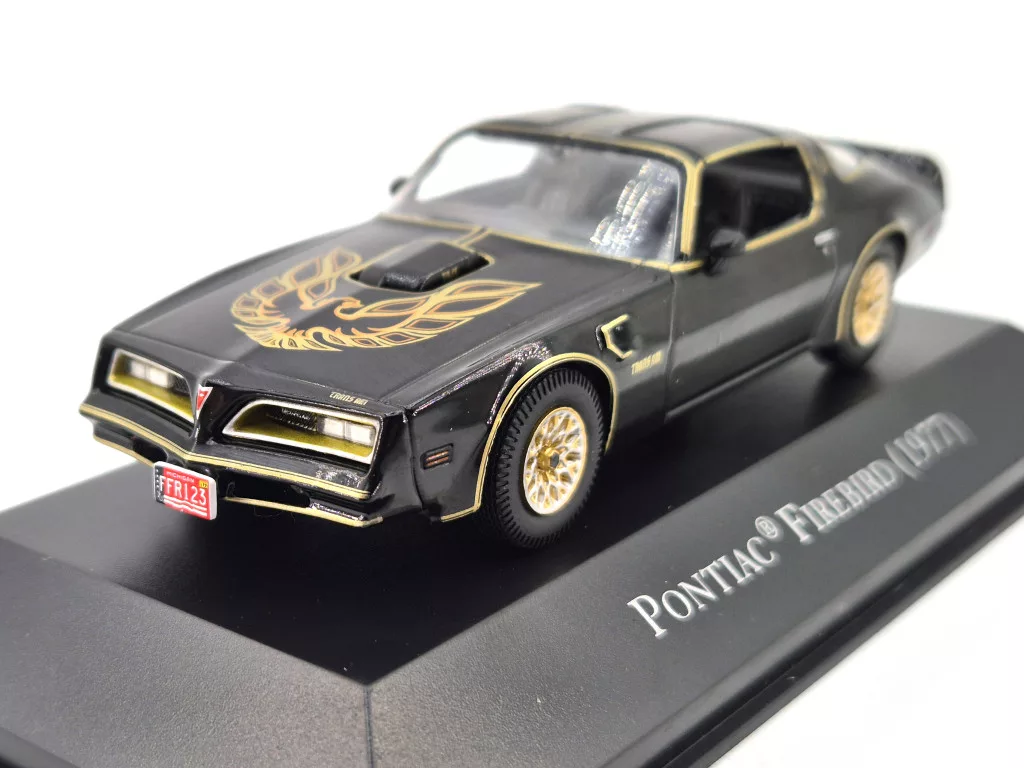
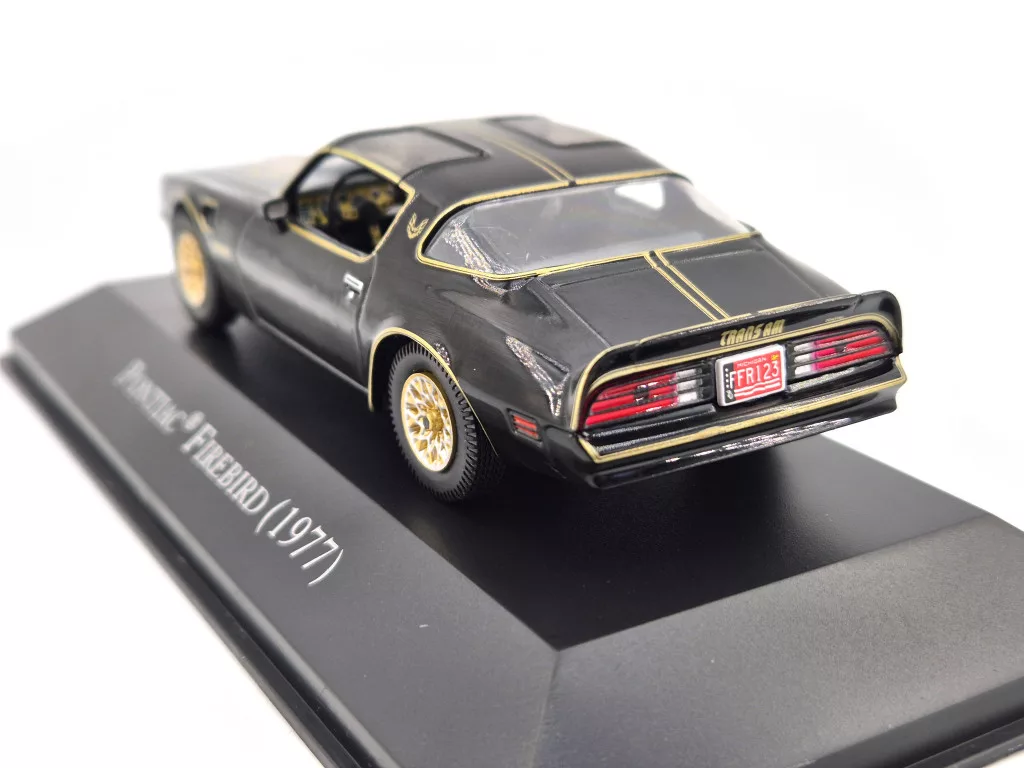
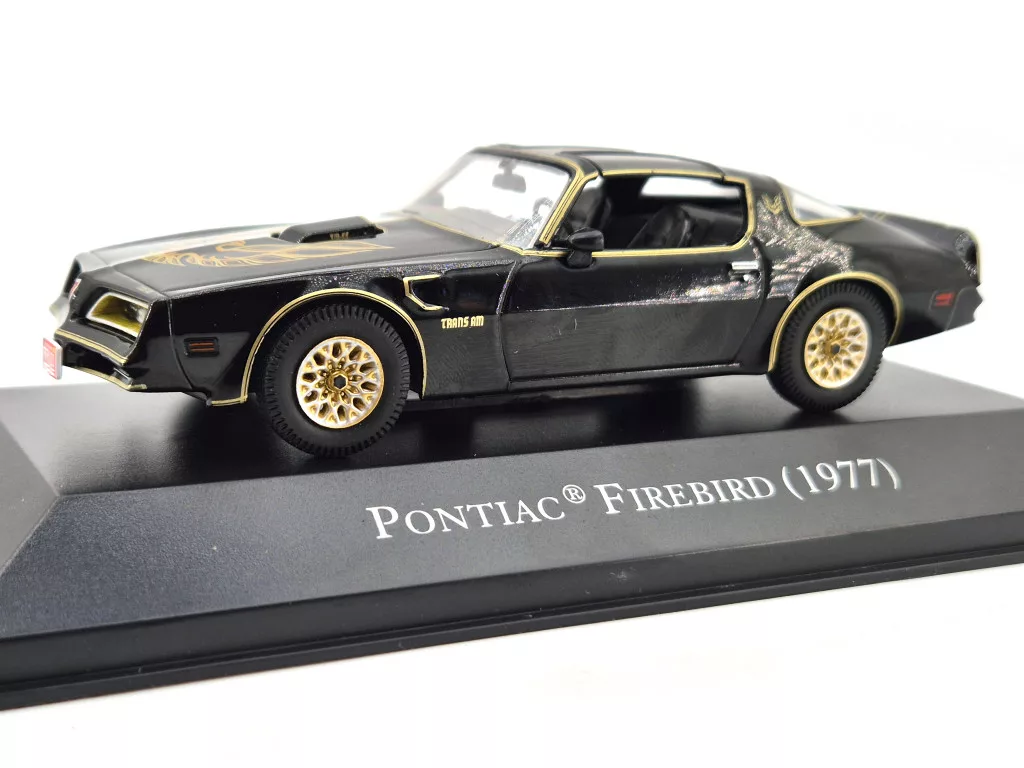
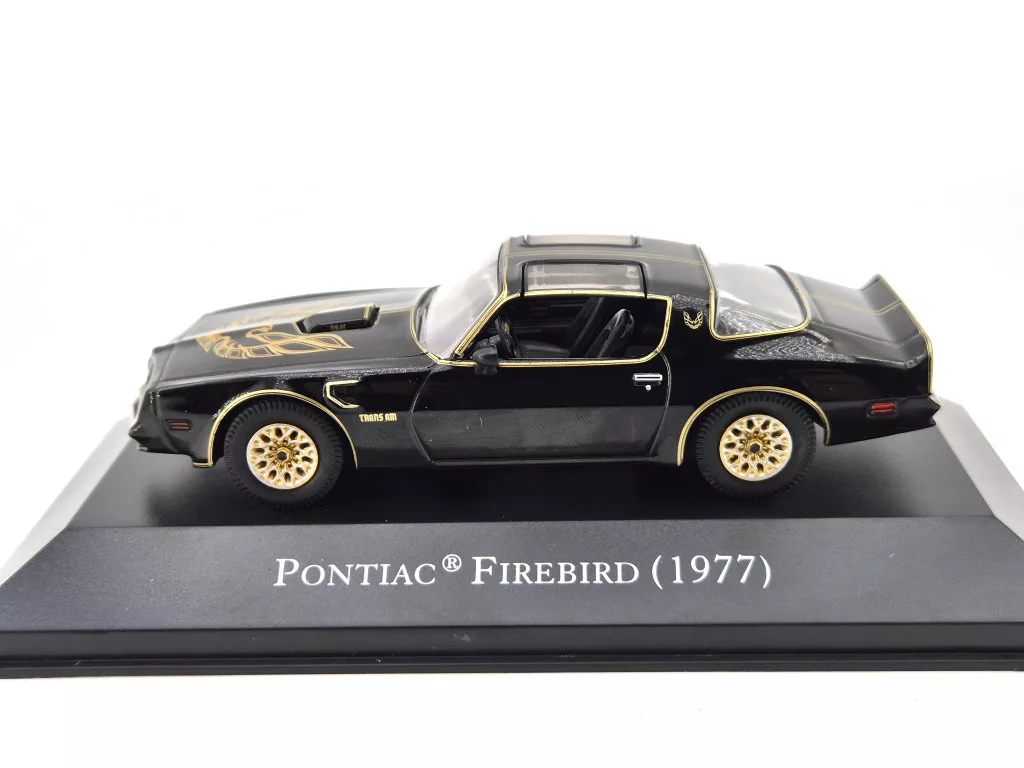
The Pontiac Firebird Trans Am (1977) is one of the most expressive and recognizable American cars, perfectly capturing the muscle car atmosphere of the 1970s. The Firebird was originally introduced as a sibling model to the Chevrolet Camaro, but the Trans Am version developed a personality of its own, with a more aggressive appearance, sportier details and a much stronger road presence. The 1977 model year is especially important, as by this time the Trans Am had become not only a car, but also a widely recognized cultural symbol.
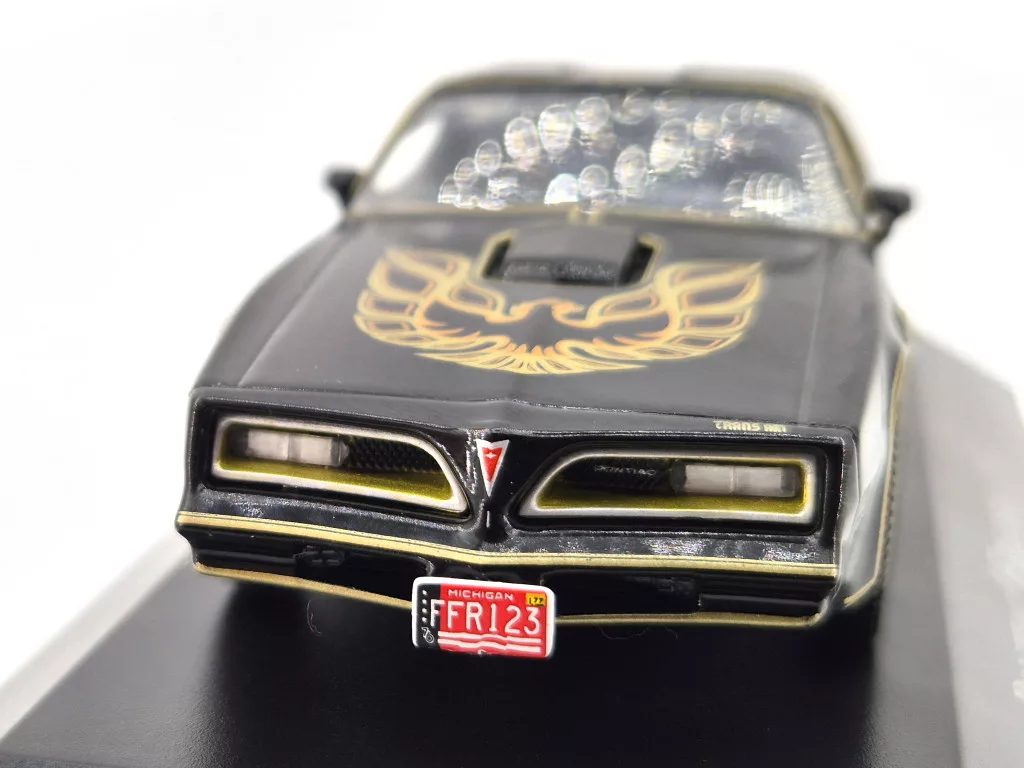
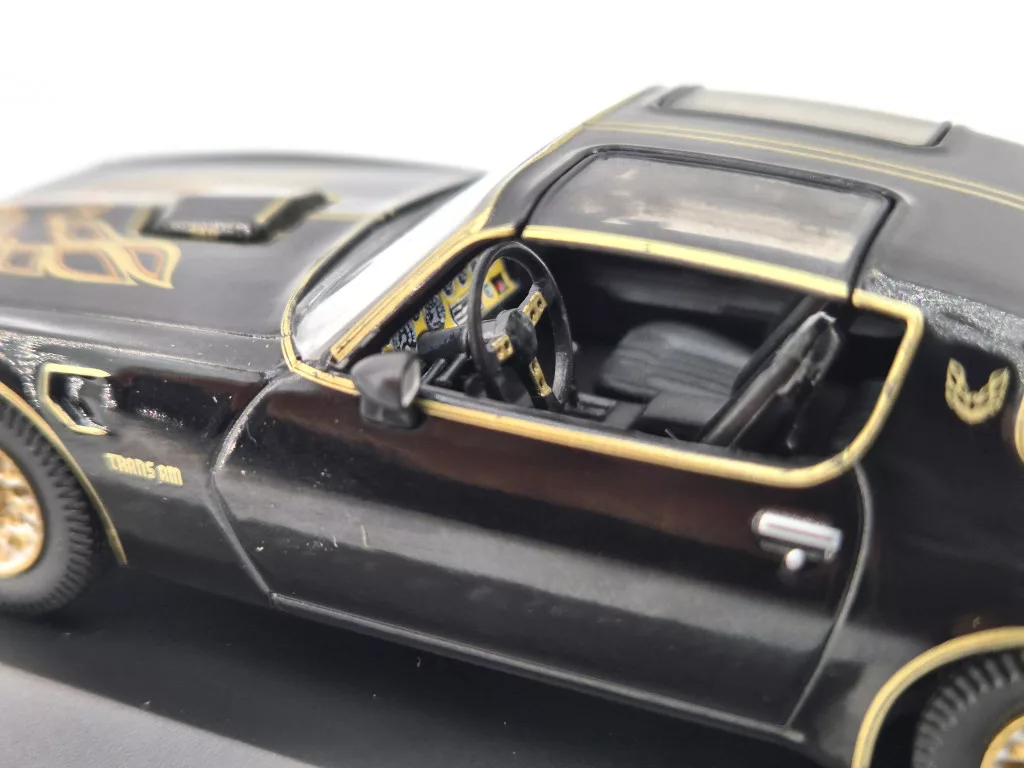
Its design is highly dramatic. The long hood, low coupe shape, wide stance and distinctive front end all suggest classic American performance culture. Trans Am models are often associated with bold graphics, prominent intake details and the confident styling language of the era. This was not a car built around understatement; it became famous because it looked strong, self-assured and unmistakably American.
The pop-cultural significance of the Pontiac Firebird Trans Am is particularly strong. In the late 1970s, the type became closely associated with films, car chases and American road stories. For many enthusiasts, the image of a black and gold Trans Am represents the free, rebellious and visually striking automotive spirit of the period. This background still adds greatly to its collector appeal today, because the car represents more than a classic American coupe; it is a visual symbol of an entire era.
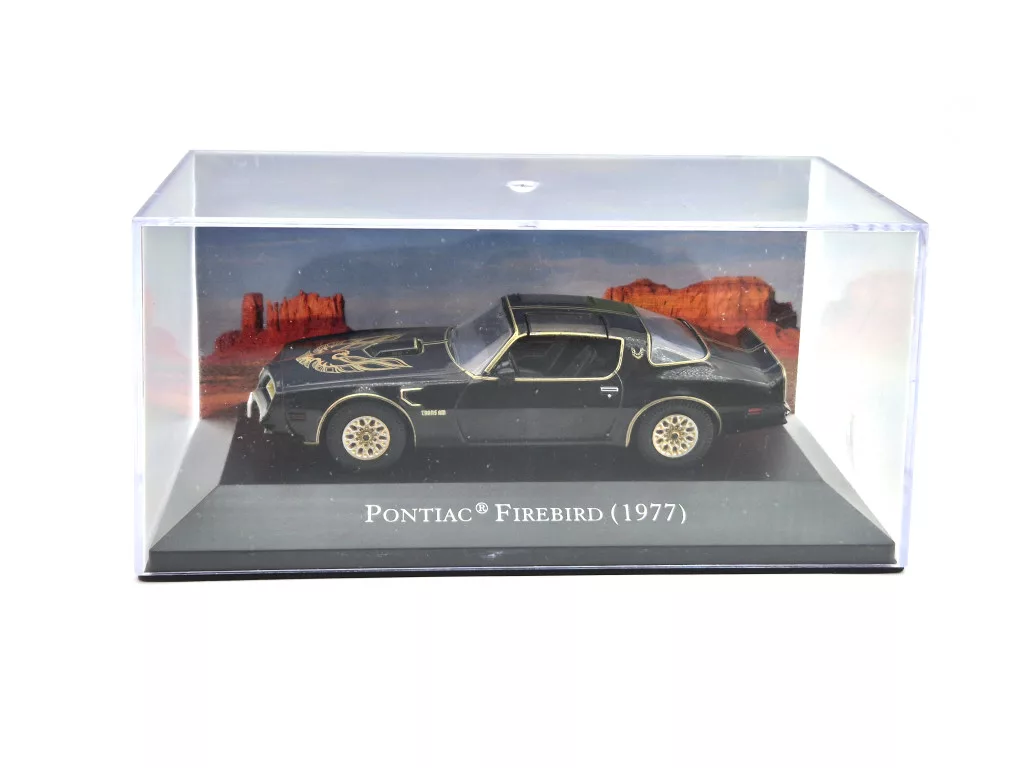
The 1:43 scale suits this model very well, as it is large enough to show the Firebird’s characteristic proportions, long hood and wide coupe silhouette, while still remaining compact for display in a collection. The Edicola edition is a good choice for collectors looking for accessible classic models with historical or pop-cultural importance.
This Pontiac Firebird Trans Am (1977) – Edicola – 1:43 is an excellent choice for fans of American cars, collectors of classic muscle cars, Pontiac enthusiasts and anyone who appreciates the powerful, dramatic and cinematic automotive style of the 1970s.