The Volvo 240 was not just a Swedish passenger car – for an entire generation it defined the concept of a reliable, long-lasting, everyday vehicle. Volvo introduced the 240 series in 1974 and continued producing it until 1993, which is a remarkable achievement in itself: it remained on the market in nearly unchanged form for close to two decades, because buyers were loyal to it. The boxy bodywork was not a fashionable design decision but a deliberate engineering choice: the large glass surfaces provided excellent visibility, the high roofline offered a comfortable interior, and the rigid frame formed the basis of a safe structure. The 240 was one of the first mass-produced passenger cars to undergo side-impact testing, and Volvo's research into crumple zones during this period had a significant influence on the entire industry.
The 1986 model year represents a more mature era of the 240: by this point the model had moved past the early teething problems of the first generation, the engines and suspension had been fine-tuned, and the interior had been modernised to meet the demands of the time. The 240 achieved considerable success in both Europe and North America – in Sweden it was considered almost an essential household item, while in the United States it was surrounded by legends about its reliability. It is not uncommon to find examples still running today with mileage exceeding 400,000–500,000 kilometres, which is partly due to the relatively simple, easy-to-repair mechanics. The Volvo 240 estate variant was particularly popular, but the sedan was also widely used – the model presented here depicts the latter.
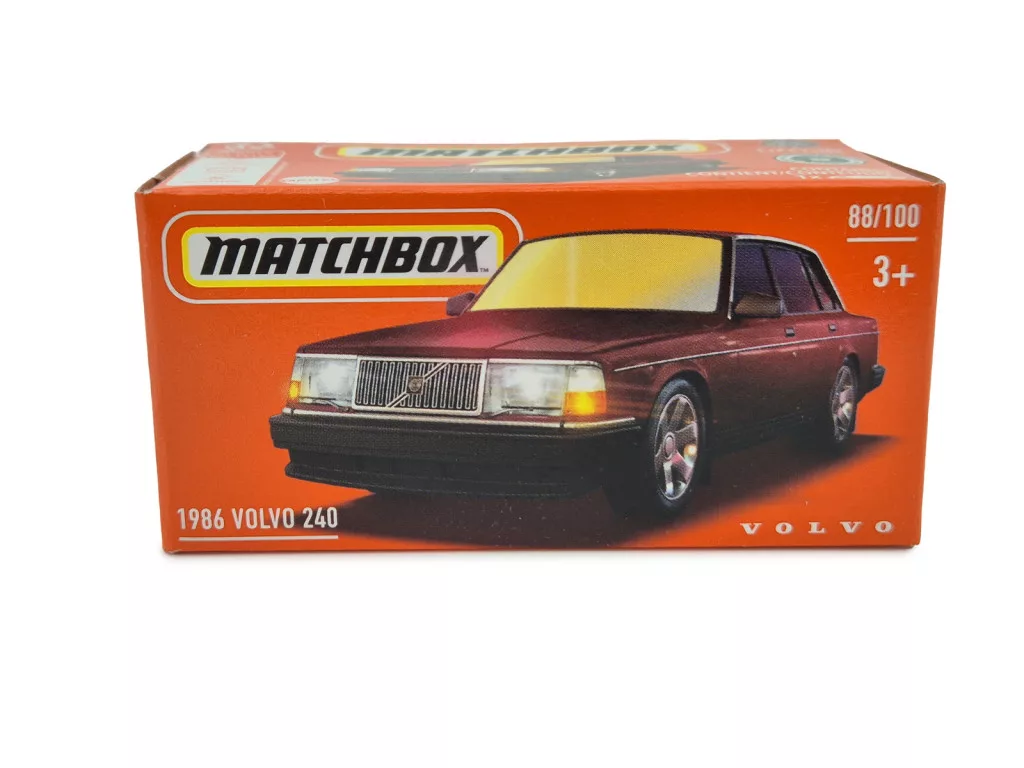
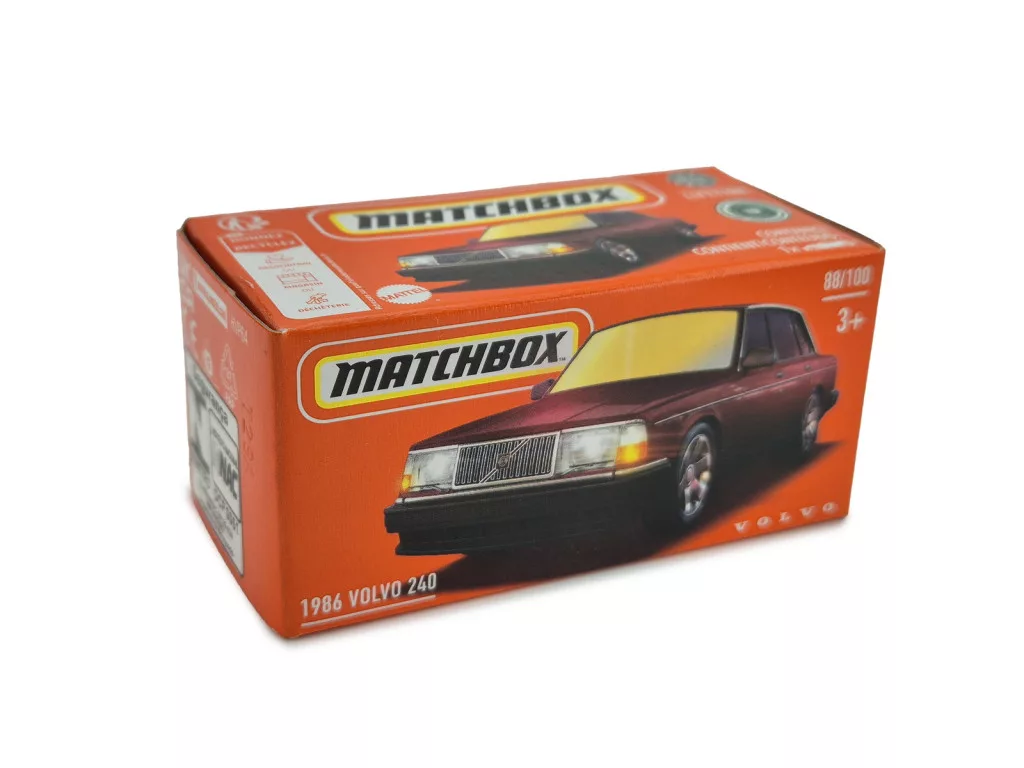
The world of Matchbox 1:64 scale small cars offers the advantage of a very handy, palm-sized format: at 1:64 scale, a model of an average passenger car is roughly 6–7 centimetres long, so it fits easily on a smaller display shelf, and dozens of pieces can fit into a collection the size of a shoebox. The Matchbox brand has been producing small cars at this scale since the early 1960s, and the depiction of the 240 fits into the tradition in which the brand has always been fond of recreating everyday, real-world types alongside sporty or fantasy models. The burgundy colour suits the understated, civil character of the 240 well – this shade was genuinely characteristic of the model during its heyday in the 1980s.
This boxed Matchbox model holds its own as a toy car – the manufacturer recommends it from age 6 – but there is something special in it for Volvo enthusiasts and collectors drawn to classic street cars as well: the 240 is today a symbol of a bygone, simpler era in which cars were designed for durability and practicality rather than design awards. The model is non-opening, but even at 1:64 scale the distinctive, boxy silhouette of the model is recognisable, along with the characteristic C-pillar and straight lines that make the 240 identifiable at first glance.