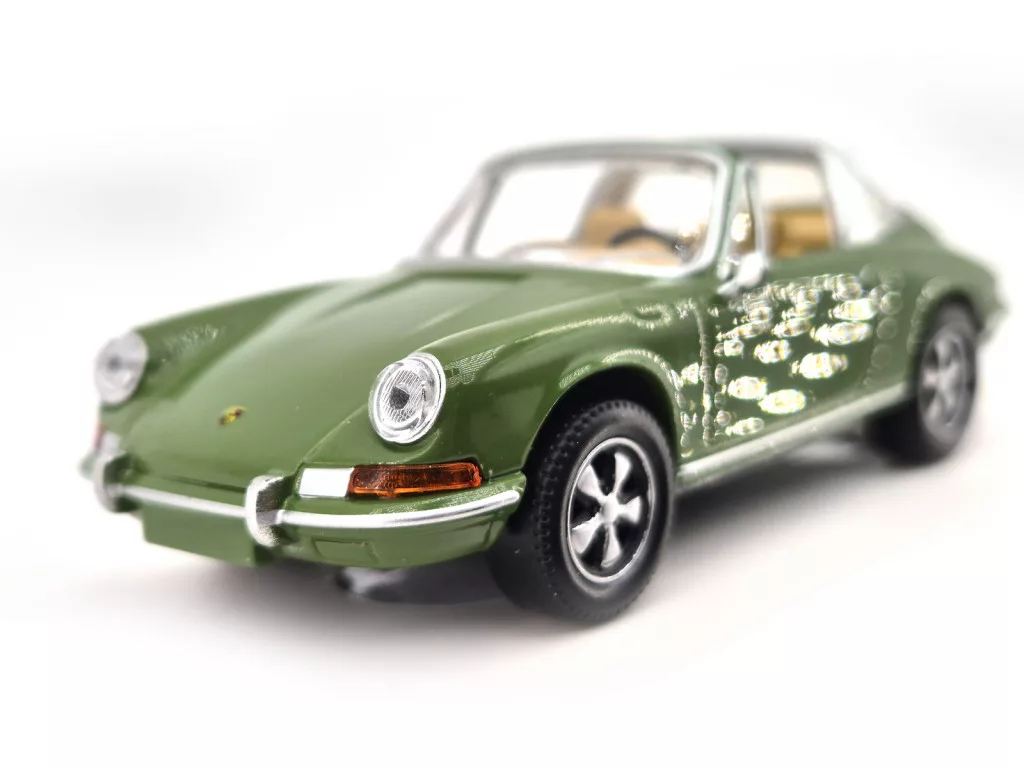
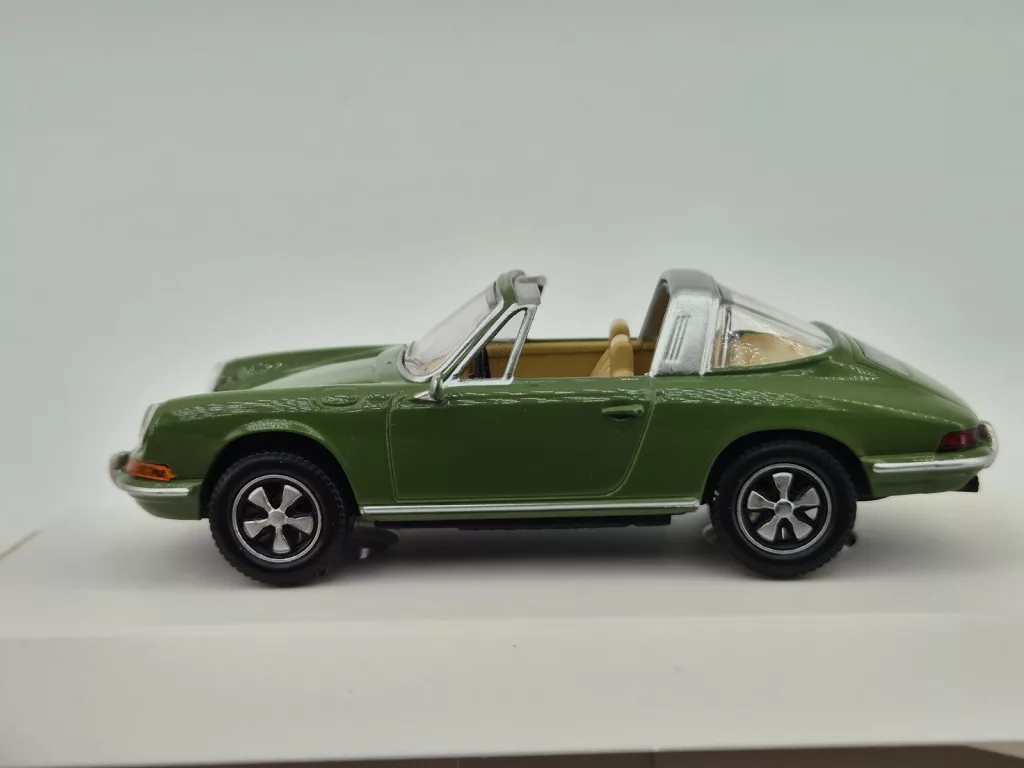
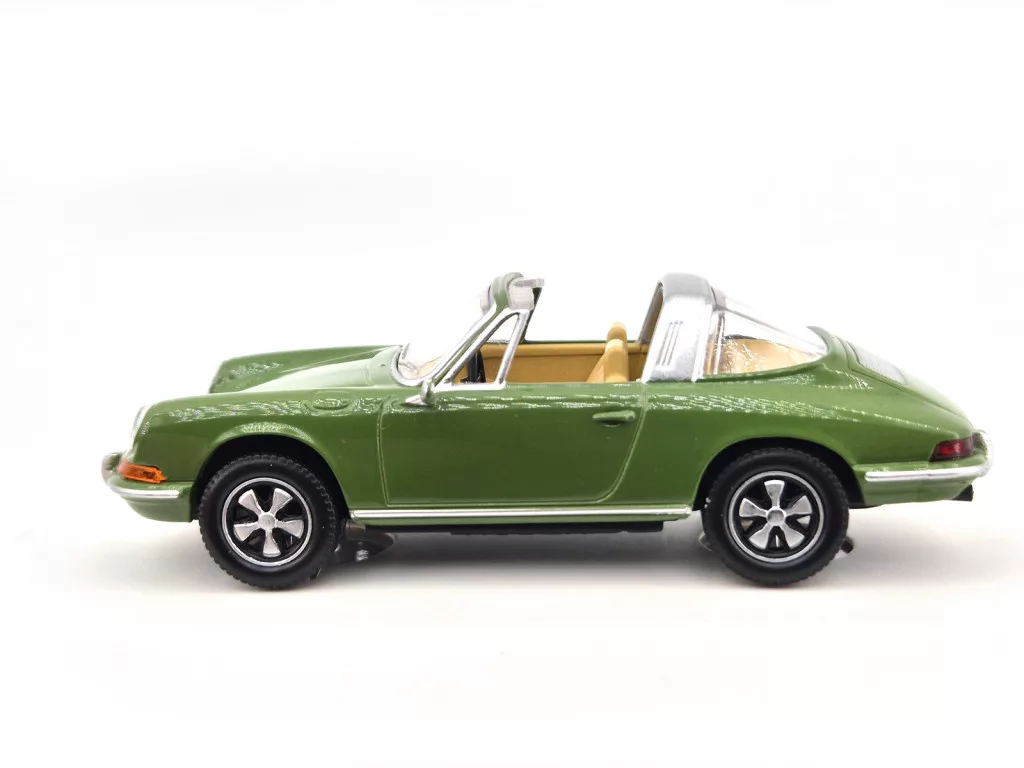
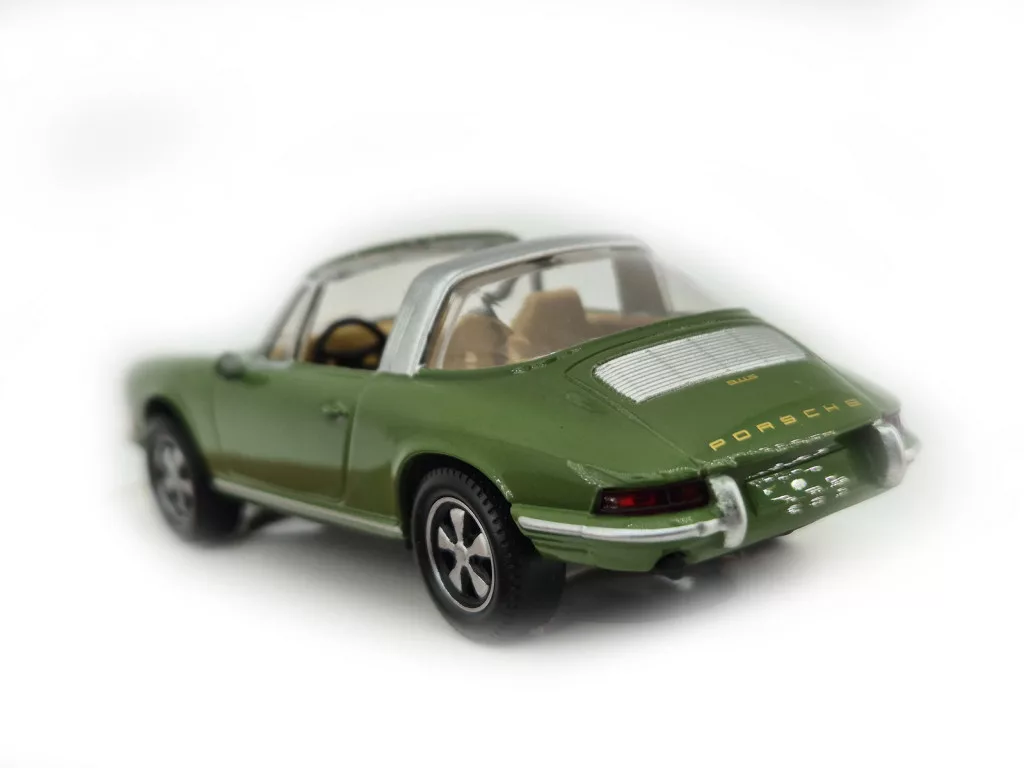
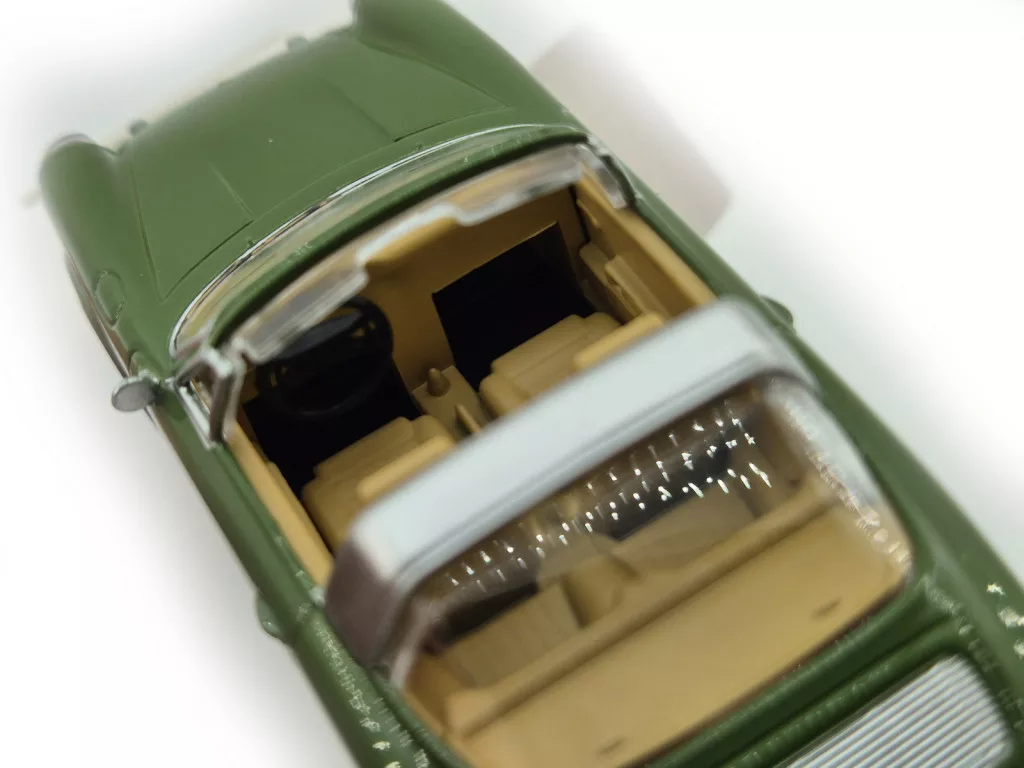
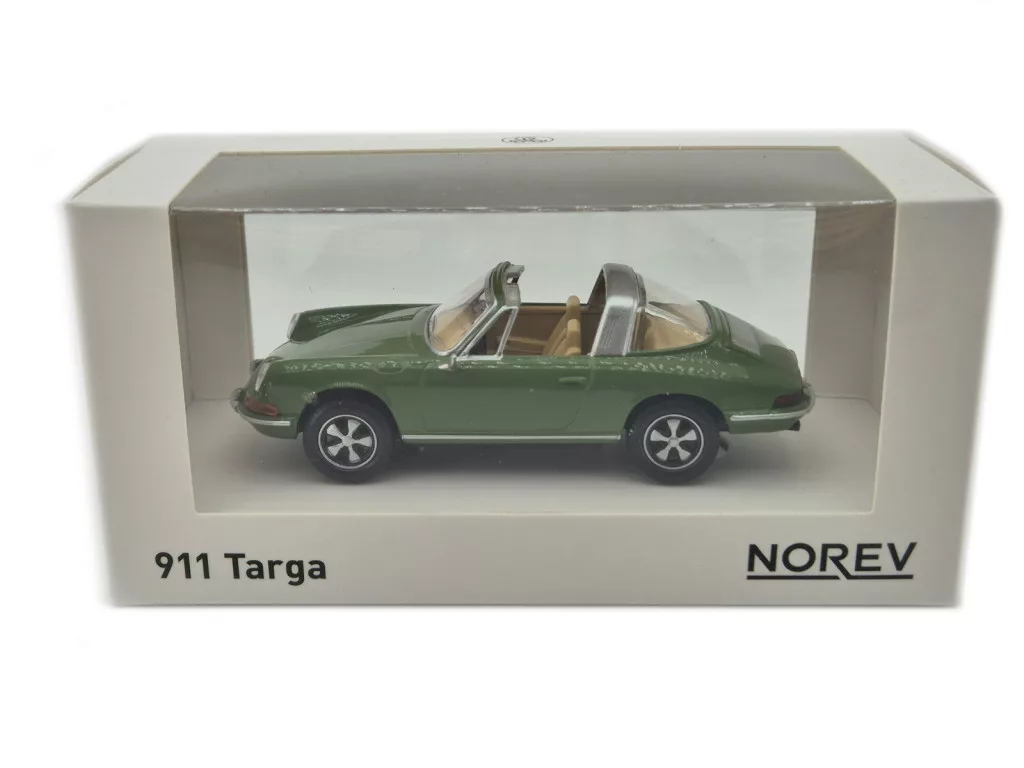
The name Porsche 911 Targa comes from an Italian word: "targa" means shield or plate, and refers to the Targa Florio Sicilian race series on which the Porsche factory achieved numerous victories. The name first appeared in 1967, when the Stuttgart manufacturer responded to anticipated tightening of American safety regulations with a distinctive solution: rather than building a conventional convertible, it incorporated a massive stainless steel safety hoop into the bodywork, behind which the rear window and the curved roof section could be removed. This solution not only preserved the rigidity of the body but also created an entirely new, instantly recognizable silhouette.
The 1969 Porsche 911 Targa represents a mature, refined version of the first-generation 911 series. By this point the model had overcome its early teething troubles — including the notorious tendency of early examples to oversteer, which the factory gradually corrected by increasing the wheelbase and fine-tuning the suspension. By the late 1960s, the 911 had matured into a reliable yet lively sports car, made distinctive by its air-cooled, rear-mounted flat-six engine. The Targa variant was particularly popular in the United States, where many appreciated the open-top experience but were less keen on the structural compromises of a convertible. Production of the series continued to evolve over the decades, and the Targa body style became so iconic that Porsche continues to use the name and the distinctive steel hoop design to this day.
Norev, the French model manufacturer, has long been known for its careful attention to classic European cars in 1:43 scale. This scale is one of the most widespread categories in collector models: a model at this scale typically measures around 9–10 centimetres in length, making it easy to fit on a display shelf, a desk, or within an automotive-themed collection without taking up much space. The 1:43 scale also provides sufficient size for the distinctive design details — the Targa's characteristic steel hoop, the wide C-pillar, the rounded rear section, and the expressive front lamp clusters — to appear recognizably on the model. The green finish is not an arbitrary choice: around the turn of the 1960s and 1970s, shades of green, including vivid Irish green and more olive tones, were very fashionable on the sports cars of the era, and such colours featured in Porsche's range as well.
This Norev 1:43 Porsche 911 Targa (1969) model is non-opening — the doors, bonnet, and boot lid remain in fixed positions — which is typical of pieces in this size category intended primarily for display. The emphasis is on exterior appearance and formal accuracy. It is recommended for collectors who wish to preserve the early era of the Porsche brand, the design philosophy of the late 1960s, or the unique appearance of the Targa body style in the form of a compact, aesthetically pleasing model in their collection.