The name Porsche 911 Targa derives from an Italian word: "targa" means shield, and refers directly to the Targa Florio mountain race in Sicily, in which the Porsche factory competed regularly from the 1960s onwards. The name was no coincidence: Stuttgart deliberately linked the car to the racing heritage that formed the foundation of the brand's identity. The Targa body style itself debuted in 1967, offering a distinctive solution: the central section of the roof was removable, while a substantial stainless steel B-pillar — the characteristic "Targa bar" — maintained the rigidity of the body. This construction could also be interpreted as a preemptive response to anticipated safety regulations in the United States, where it appeared that fully open-top cars might soon be banned. The Targa was thus simultaneously a convertible and a coupe, without fully taking on the compromises of either category.
The 1969 model year is a particularly important milestone in the history of the 911. That year, Porsche introduced the longer-wheelbase body, which resulted in more stable handling and improved drivability compared to the previous generation — a change frequently cited as one of the most significant development steps of the early 911s. The engine was mounted at the rear, as an air-cooled flat-six, which in the Targa variant worked in exactly the same form as in the coupe. In the late 1960s, the output of the 911 series engines ranged roughly between 110 and 160 hp depending on the variant, and Porsche continuously refined the drivetrain, suspension and running gear. The 1969 Targa therefore represents not a static snapshot, but a mature yet still early phase of a continuously evolving model family.
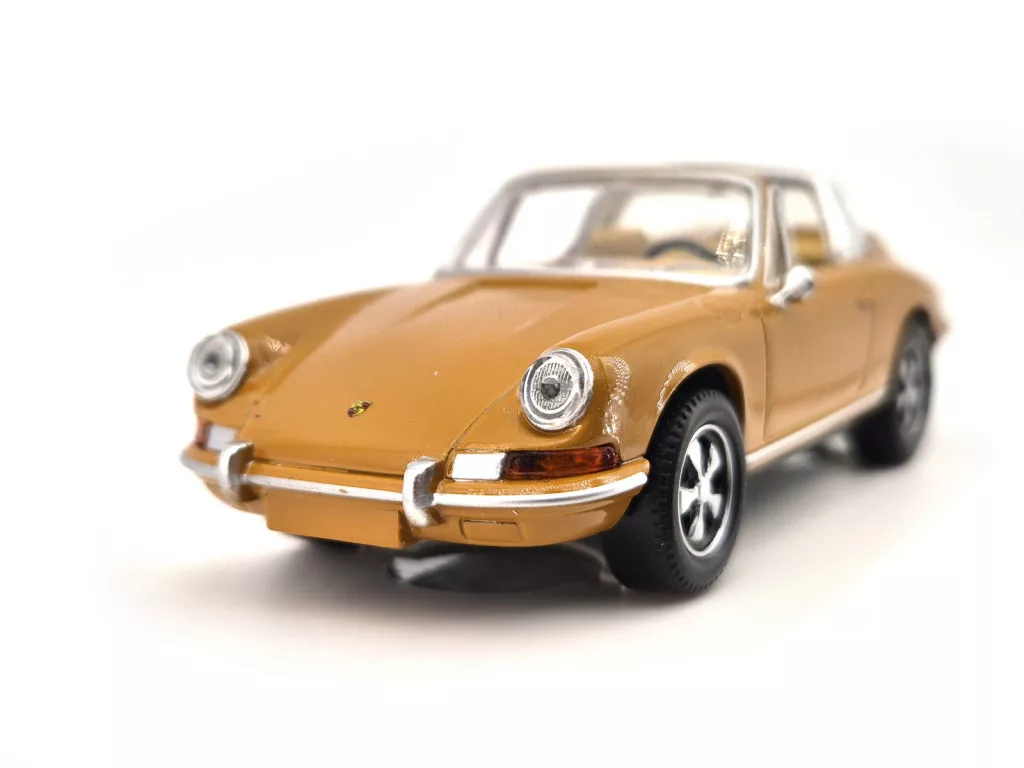
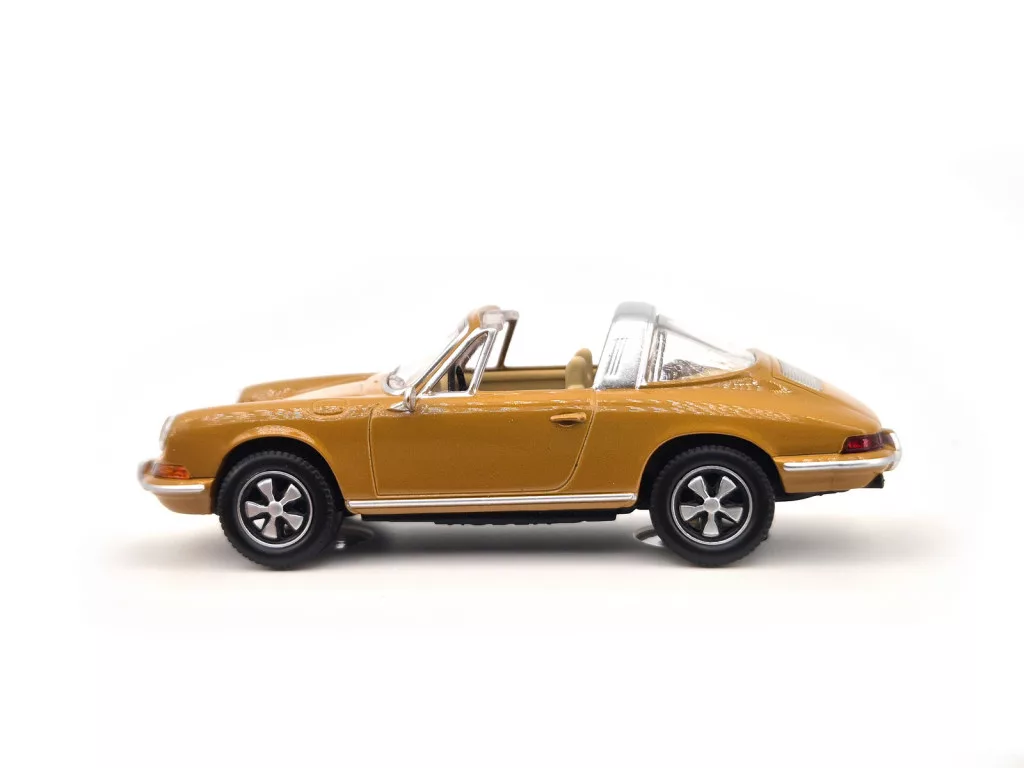
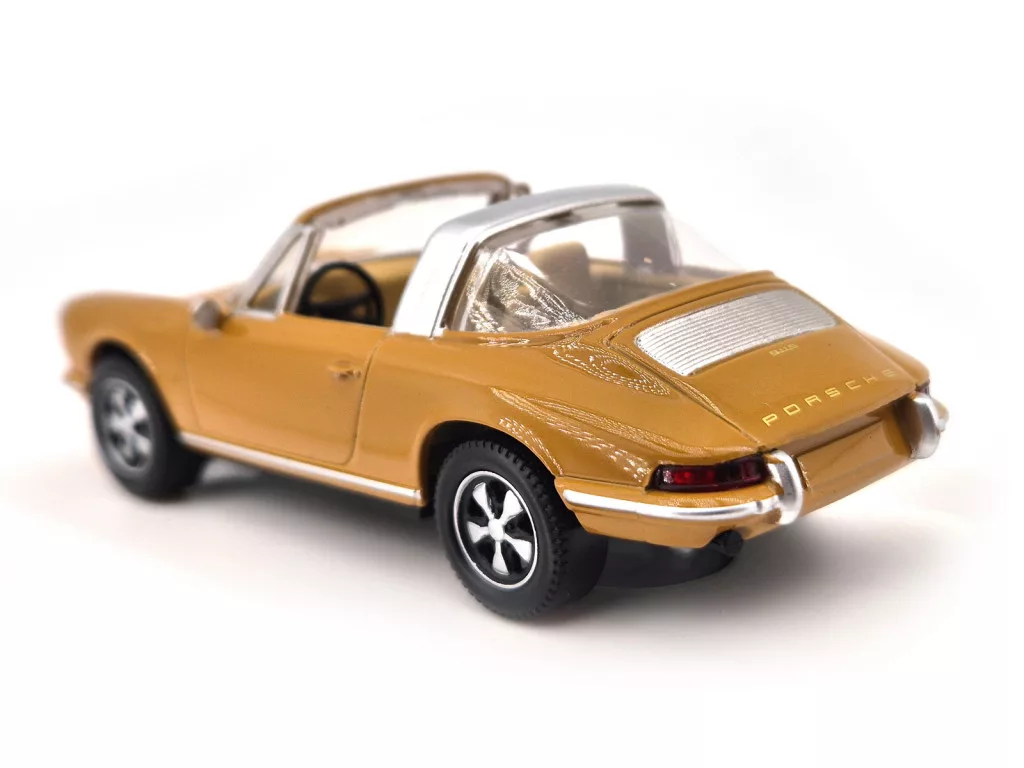
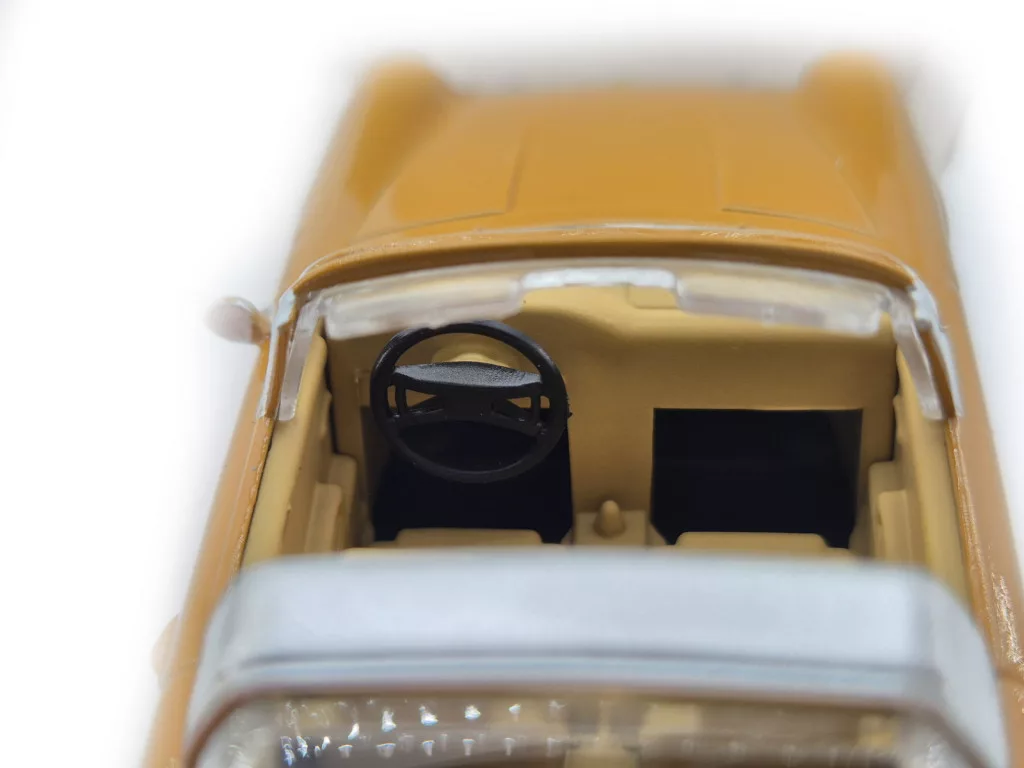
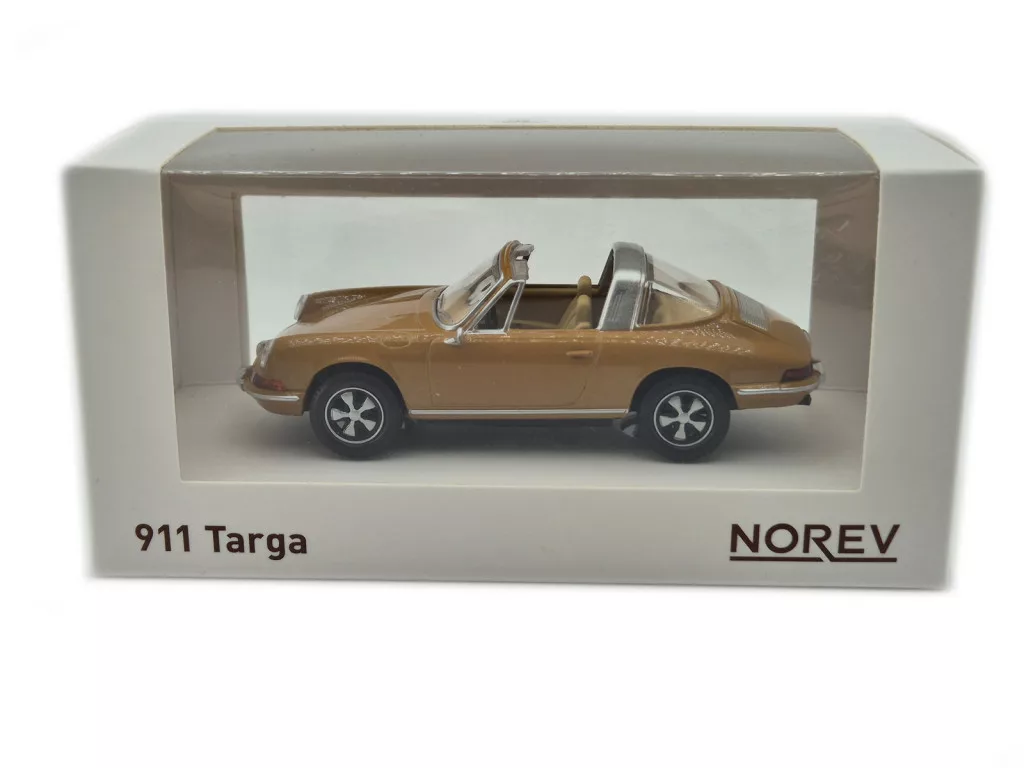
Norev, the French model manufacturer, has long been at home in the world of European classics at 1:43 scale, and takes particular care in depicting early Porsche models. This copper red model captures the distinctive lines of the 1969 Targa: the wide Targa bar, the rear glass surface and the roof profile that differs from the coupe are all rendered in recognisable form. The 1:43 scale is one of the most widespread and practical formats for collector models — a model at this scale is typically around 9–10 centimetres in length, which looks equally good in a display case, on a shelf or on a desk, and can easily be placed alongside other pieces of the same scale. According to the description, the model is non-opening, which is standard at this scale: the level of detail is focused on the exterior presentation.
The copper red colour did indeed feature in the early 911 palette, and within the Porsche range of the time, warm, saturated brownish-red shades worked particularly well with the car's organic, curved lines. This colour is not the eye-catching sports car red, but a more restrained, warmer tone that brings out the details of the car's form — the curve of the Targa bar, the rounded edges of the engine lid, the contours of the fenders — more effectively than a brighter, more saturated colour. For collectors of the early Porsche 911 series, the 1969 Targa represents a variant that holds a justified place in any collection, both from a design history and a development history perspective.