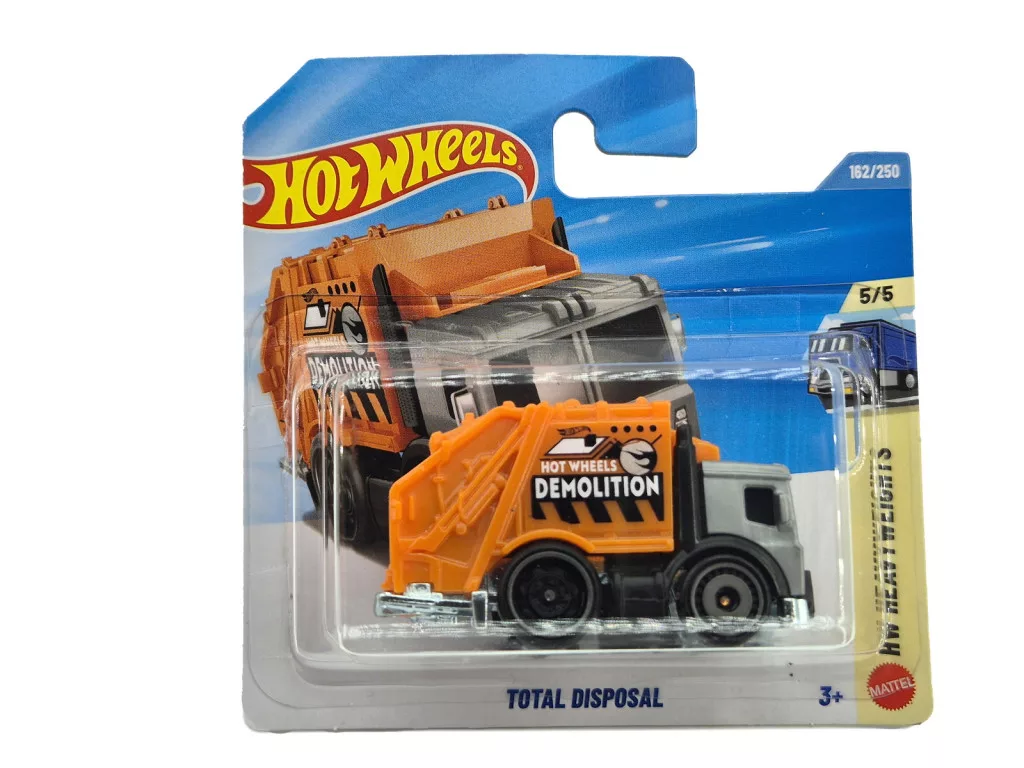
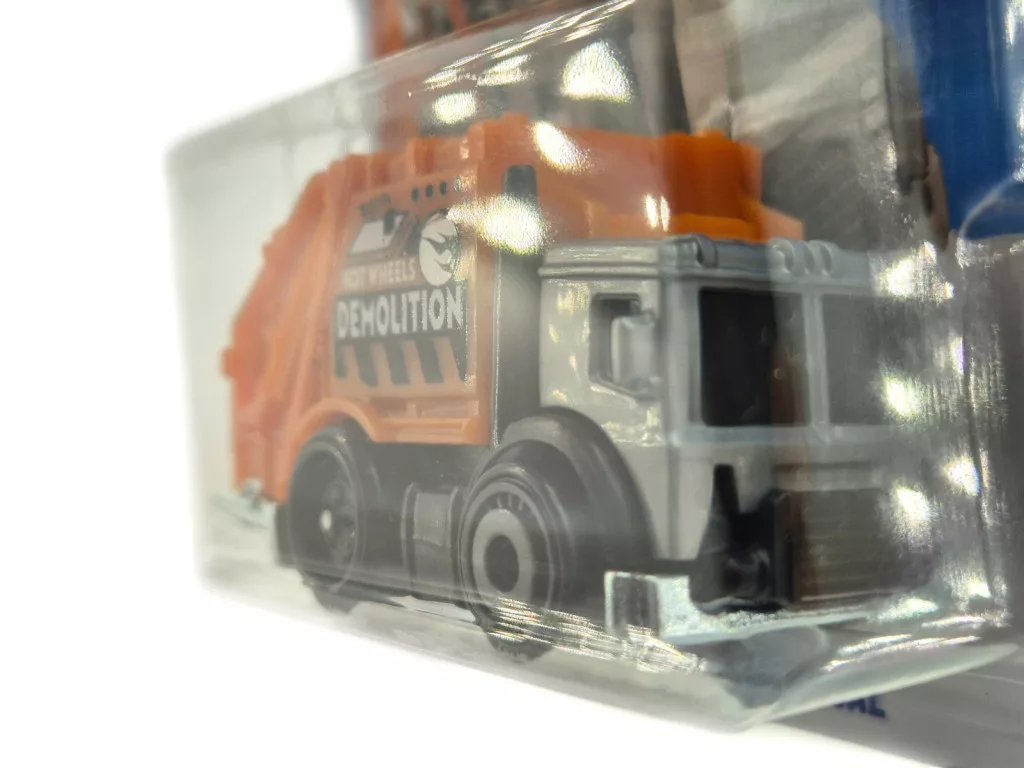
The Hot Wheels Total Disposal is not a replica of a real production vehicle you might see on the street, but rather an industrial work vehicle born from the imagination of Hot Wheels designers — exactly the kind of creation that has set the brand apart from traditional miniature replicas since its founding in 1968. The Total Disposal is a massive, waste-handler-style vehicle that embodies the spirit of the HW Heavyweights sub-series: large, heavy, industrial machines that evoke the atmosphere of construction sites, scrapyards, and warehouse areas rather than highways. This sub-series deliberately leans toward robust, angular forms and a hard-working, "dirty" aesthetic — in contrast to the sporty or extreme show-car direction of other Hot Wheels offerings.
The HW Heavyweights 5/5 designation indicates that this Total Disposal is the fifth and final piece of the given sub-series, while the 162/250 number denotes its position within the overall 2025 Hot Wheels mainline series. This annual retail mainline contains approximately 250 different models each year, and every piece receives a number — helping collectors assemble the complete series. The Treasure Hunt designation, however, sets this model apart from the rest: Treasure Hunt pieces are sold at the same price as regular series models, but are distributed to store shelves in smaller quantities, meaning that finding one is essentially a matter of chance. TH-designated models feature a distinctive flame-stripe and the TH marking, making them instantly recognizable to experienced collectors.
The model is made in 1:64 scale, which is the classic Hot Wheels size — also known as matchbox size: an average passenger car model at this scale is roughly 6–8 cm long, and the Total Disposal, given its work vehicle nature, likely falls into the taller, stockier end of that range. This size takes up little space on a display shelf, yet is detailed enough when held in hand to appreciate the body work. The model — like all Hot Wheels mainline pieces — comes in a small card blister packaging, which displays the series number, the sub-series name, and the Treasure Hunt designation. The condition of the packaging matters greatly to some collectors: many keep the piece sealed, as the card itself is part of the documentation.
The Hot Wheels Treasure Hunt program has been running since the mid-1990s: Mattel introduced the system at that time, in which designated, less frequently distributed pieces within the annual mainline series add to the excitement of collecting. Over the years, the program split into two tiers: the standard Treasure Hunt and the far rarer Super Treasure Hunt (featuring SpectraFlame paint and rubber tires) variants. This Total Disposal belongs to the basic TH category, meaning it is available in retail stores — but you have to look for it. And that is precisely what keeps Hot Wheels collecting an active hobby for many people to this day, built around minutes spent searching in front of store shelves.