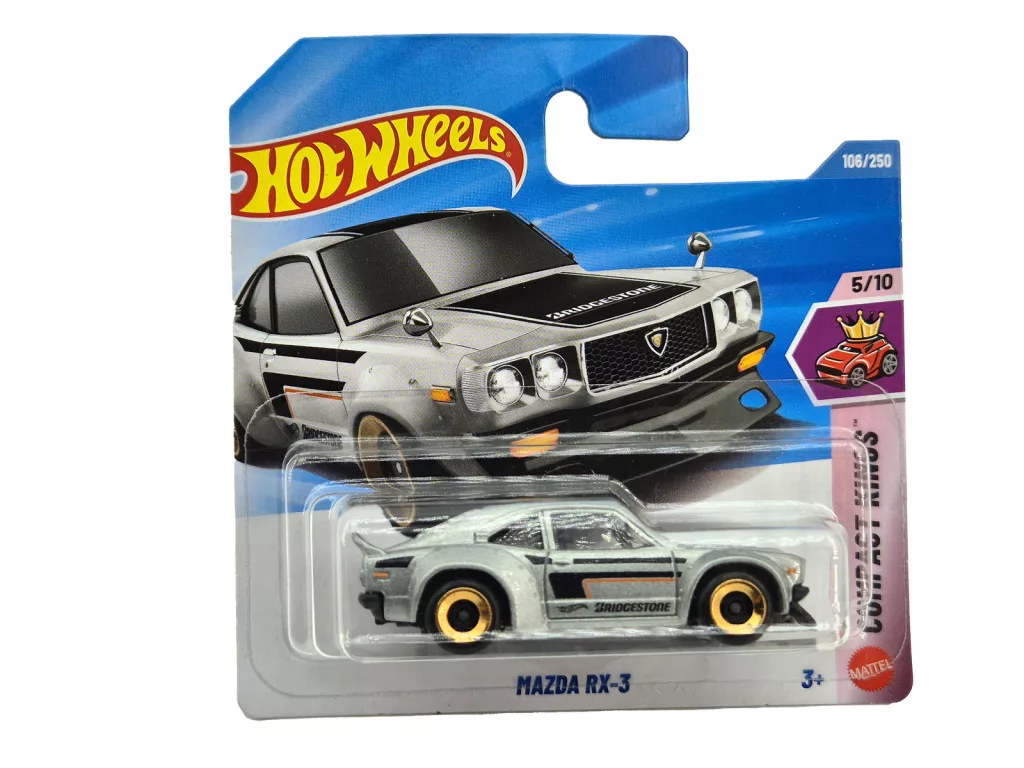
The Mazda RX-3 is one of the most recognizable Japanese compact sports coupes, produced by Mazda between 1971 and 1978. What made the car special was not a conventional piston engine, but the Wankel rotary engine, in the application of which Mazda was a true pioneer across the entire automotive industry. Despite its compact size, the twin-rotor rotary engine fitted to the RX-3 delivered lively performance, and the model quickly became a popular racing platform both on Japanese circuits and in international amateur motorsport. Its exterior reflected the Japanese design trends of the era: a low roofline, angular rear end, and a slim C-pillar defined the coupe body, which has since made it one of the iconic pieces of JDM culture.
In Japan, the RX-3 was sold under the name Savanna, and on the domestic market it was a serious rival to the Toyota Celica and the Nissan S30 Z-series. Rotary-engined variants became particularly popular in the Japanese touring car championship during the first half of the 1970s, where the RX-3 achieved a string of successes thanks to the combination of its light weight and an engine that performed well at high revs. Today, fewer and fewer examples remain in original condition — partly because many were converted for racing purposes, and partly because maintaining rotary engines requires specialist knowledge — all of which contributes to well-preserved RX-3s commanding serious collector value on the classic car market.
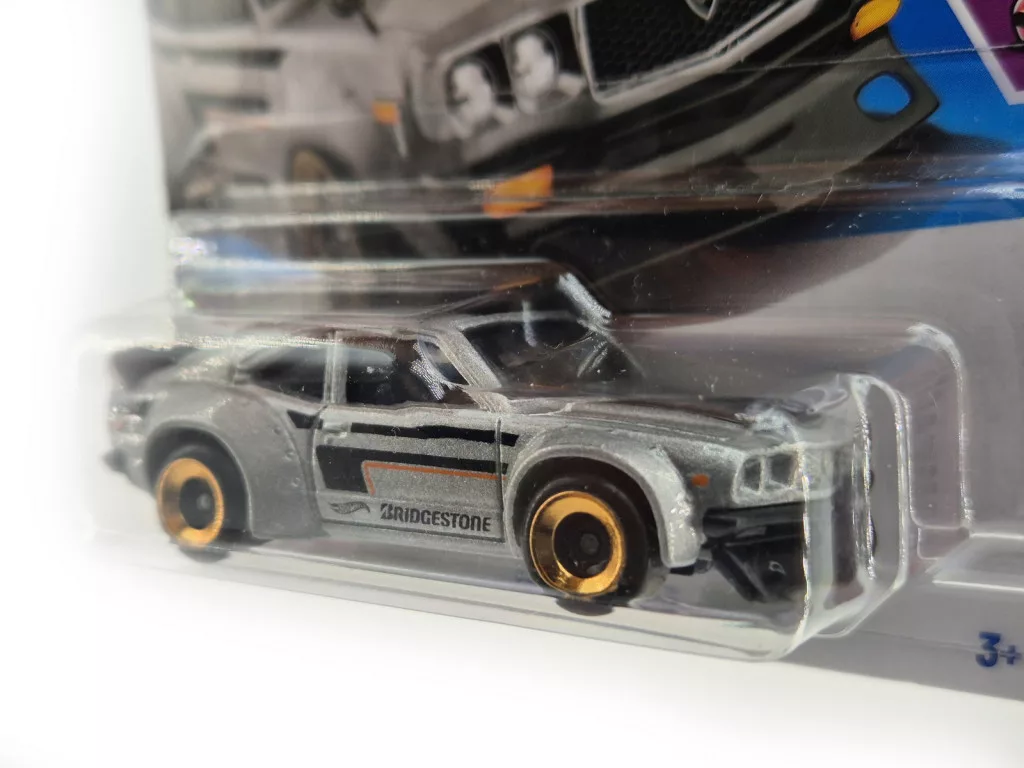
Hot Wheels released this small Japanese classic as part of the Compact Kings themed series, which is dedicated specifically to compact, sporty Japanese and Asian cars. Within the series, the RX-3 carries the number 5/10, and in the broader Hot Wheels mainline it occupies position 106/250. The model is made in 1:64 scale, meaning it measures approximately 6–7 centimeters compared to the real car's length — just the right size to hold in your hand, while also looking great on a display shelf or in a collector storage unit. The small-card blister packaging preserves the original, unopened condition, which is an important consideration from a collector's perspective.
1:64 Hot Wheels models are generally made from diecast metal combined with plastic elements, and at this scale it is primarily the body shape, overall proportions, and the character of the car that the manufacturer conveys — in the case of the RX-3, this means the low-roofline, stocky coupe silhouette that is the most distinctive visual feature of the real car. The Mazda RX-3 Hot Wheels model is aimed at collectors who feel a connection to the 1970s era of the Japanese automotive industry, the rotary engine culture, or the world of JDM-style compact sports cars — but it is equally a good pick for anyone simply looking for a characterful small car for the shelf.